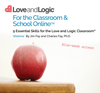

A student argues about an assignment. Another refuses to follow a direction. In moments like these, teachers need more than quick corrections; they need practical ways to hold clear limits while keeping relationships respectful. The 9 Essential Skills for the Love and Logic Classroom workbook gives educators a place to review key ideas, reflect on common classroom challenges, and consider how to respond. It accompanies the related Love and Logic curriculum, with skills focused on empathy, choices, student responsibility, and problem-solving. Whether you’re learning the approach through training or revisiting familiar strategies, the workbook can help connect those ideas with the everyday decisions you make in class.
Key Takeaways
- Use the workbook to turn training into classroom practice: Review the nine skills and reflect on how they apply to situations you encounter with students.
- Pair empathy with clear boundaries: Respond calmly, offer appropriate choices, and give students opportunities to solve problems and take responsibility.
- Verify product details before ordering: Check Love & Logic’s official listings for current availability, edition, format, and how the workbook fits with the curriculum.
What Is the 9 Essential Skills for the Love and Logic Classroom Workbook?
The 9 Essential Skills for the Love and Logic Classroom Workbook is a companion resource for educators learning practical ways to guide student behavior and build positive classroom relationships. It supports the 9 Essential Skills for the Love and Logic Classroom curriculum with questions and activities that help participants review the ideas and consider how to use them in daily teaching.
The skills address common classroom moments, such as student arguments, setting limits, and helping students take responsibility for their choices. Educators can use the workbook to revisit techniques and reflect on how they might respond in situations they face with their students. Check the official workbook page for current product details and availability.
Who should use it, and how does it fit educator training?
The workbook is designed for teachers and other educators who want practical strategies for managing classroom behavior while maintaining respectful relationships with students. It can be especially useful for educators who have taken the related Love and Logic training, because it provides a way to review course concepts and think through how to apply them in their own classrooms.
Love & Logic describes its workbooks as complements to its curriculum. Participants can use them to engage with questions and revisit techniques between sessions, helping connect training with everyday practice. Educators exploring professional learning options can browse Love & Logic’s teacher resources for information about available training and materials.
How does it connect to the classroom course and other Love and Logic resources?
The workbook supports the 9 Essential Skills for the Love and Logic Classroom curriculum, connecting the course’s ideas with practical classroom decisions. It gives educators a place to review skills such as responding to student arguments, using empathy, setting limits, and encouraging problem-solving. The workbook is intended to reinforce the curriculum, so check the product information to confirm who can purchase it and how it is currently offered.
It also fits within Love & Logic’s wider collection of educator resources, including training, classroom materials, and other learning tools. Together, these resources help teachers build a consistent approach to student behavior and relationships. Browse the Love & Logic teacher page to explore related options and find resources that suit your classroom.
What Nine Skills Does the Workbook Cover?
The workbook organizes nine classroom skills around three goals: responding to behavior, setting limits, and building responsibility and relationships. These tools help teachers handle challenging moments with more intention while keeping expectations clear and communication respectful. The official workbook page describes the skills and the classroom approach behind them.
Respond to behavior: neutralize arguments, show empathy, delay consequences, use the Recovery Process, and try quick interventions
Five skills focus on responding to behavior in ways that keep a tense moment from turning into a prolonged conflict. Neutralizing arguments means resisting the urge to debate or trade accusations. Instead, teachers can use a calm, brief response and return attention to the expectation. Empathy helps students feel heard, even when the teacher still needs to address a behavior.
The workbook also recommends delaying consequences when a teacher needs time to respond thoughtfully. The Recovery Process gives students a chance to reflect on their choices and consider what they can do next. Quick interventions offer simple, timely ways to address disruptions before they grow. Used consistently, these strategies help teachers respond with purpose while keeping students’ dignity and learning in view.
Set limits: use enforceable statements and offer choices
Two skills help teachers communicate boundaries while giving students appropriate room to make decisions. Enforceable statements focus on what the teacher can do, rather than trying to control a student’s actions. For example, a teacher might say, “I’m happy to help when the materials are ready.” The statement makes the expectation clear and lets the teacher follow through calmly.
Choices give students some control within that boundary. A teacher might offer a student the option to begin an assignment independently or work through the first question together. Both options should be acceptable to the teacher, and the expectation should remain clear. Love & Logic’s teacher resources offer additional classroom guidance for putting these approaches into practice.
Build responsibility and relationships: help students solve problems and strengthen teacher-student connections
The final two skills encourage students to take an active role in solving problems and learning from their choices. Rather than immediately providing a solution, teachers can ask questions such as, “What could you try next?” or “What might happen if you choose that?” These prompts help students think through options and practice taking responsibility.
Supportive teacher-student relationships make this coaching easier to hear. Listening carefully, showing respect, and responding consistently can help students feel understood, even when a teacher needs to hold a limit. The goal is to pair accountability with guidance. Over time, students can build confidence in their ability to work through challenges and return their attention to classroom learning.
How Can Teachers Apply the Skills in the Classroom?
Love and Logic skills can become part of everyday classroom routines, not just responses to serious behavior concerns. A few steady words, a clear choice, or a question that invites problem-solving can help students decide what to do next. Practice the strategies in low-pressure moments so they feel more natural when emotions run high.
Show empathy before addressing consequences
When a student makes a mistake, acknowledge the feeling before talking about the behavior or what happens next. You might say, “That sounds frustrating,” or “I can see this is hard.” A calm, sincere response can help the student feel heard and make it easier to focus on a solution.
For example, if a student crumples an assignment after struggling, try: “This is frustrating. We can talk about what to do next when you’re ready.” Empathy does not mean ignoring the behavior or removing a fair consequence. It gives the student a moment to settle before you address the choice and its impact. The 9 Essential Skills for the Love and Logic Classroom offers educators a framework for practicing this response and other classroom skills.
Set clear limits and offer choices
Students need clear expectations, and they benefit from having a say in how they meet them. State the limit calmly, then offer two options you can accept. For example: “You can start the questions on your own, or we can do the first one together.” The expectation stays firm, while the student has some control over the next step.
Keep choices brief, respectful, and realistic. Avoid offering an option you are not prepared to follow through on, and give the student time to decide. If they do not choose, calmly use the option you described. This helps keep the interaction from turning into a debate and gives students practice making decisions within classroom boundaries. Love & Logic’s teacher resources include materials to help educators develop practical classroom skills.
Help students take responsibility and solve problems
When a student brings you a problem, pause before stepping in with an answer. Listen first, then ask questions that help the student consider their options: “What have you tried?” or “What could you do next?” If they feel stuck, suggest a few possible solutions and let them choose one that is appropriate.
This approach can help when a student forgets a needed material, has a disagreement with a classmate, or misses a deadline. Support them in thinking through what happened, who was affected, and how they might make things right. You can check in later to discuss what worked and what they might try next time. These conversations take practice, but they give students opportunities to build judgment, independence, and confidence in handling everyday challenges.
Stay calm and consistent when students struggle or argue
When a student argues or talks back, a long explanation can turn into a back-and-forth. Keep your response short and steady. For example, say, “I’m ready to listen when we can speak respectfully,” then give the student time to respond or return attention to the lesson. A simple, repeated message can keep the focus on the expectation instead of the argument.
Consistency helps students know what to expect. Use language you can deliver calmly, and follow through on classroom expectations. If you feel frustrated, pause and take a breath before responding. You can revisit the student’s concern once everyone is calmer. This does not mean dismissing their point; it means choosing a tone and moment that support a more useful conversation. Practicing a few phrases in advance can make them easier to use during a difficult interaction.
Related products

Our workbooks are thoughtfully designed to complement the curriculum.
View productOur workbooks are thoughtfully designed to complement the curriculum.
View product
Our workbooks are thoughtfully designed to complement the curriculum.
View productWhat Strategies and Practice Materials Does the Workbook Include?
The workbook is designed to help educators put Love and Logic skills into practice, not just read about them. Teachers can use it to review key ideas, reflect on their responses, and consider how to apply the techniques in their own classrooms.
Review skills, practice them, and reflect on your progress
The workbook gives educators a structured way to revisit Love and Logic techniques and practice applying them. As you work through the material, think about how you might respond to situations that come up in your classroom, such as a disagreement or a student struggling to meet an expectation.
Reflection can help you see what’s changing over time. Are you pausing before responding? Are you giving students opportunities to make responsible choices? Consider jotting down what felt effective and what you’d like to try differently next time. The official workbook page describes it as a resource for reviewing and practicing the skills. Return to that practice as you build confidence applying the techniques with students.
Reinforce learning between training sessions
It can take time and repeated practice for a new approach to feel natural. The workbook helps teachers revisit key concepts between training sessions, so the skills stay fresh and easier to recall during the school day. After a challenging interaction, for example, pause to consider which strategy you used and what you might do in a similar situation.
To keep practice manageable, choose one skill to focus on for a week. Notice when you use it, then reflect on how the interaction went. A small, steady focus can make it easier to apply what you’ve learned without trying to change every response at once. Used alongside training, the workbook can be a helpful reference as you continue developing your classroom practice.
Adapt techniques to classroom expectations and student needs
Every classroom has its own routines, expectations, and mix of student needs. As you practice the skills, consider how to apply them in ways that make sense for your students and setting. Think about students’ ages, the expectations you’ve already established, and the support a particular situation calls for.
Adapting a technique does not mean losing sight of its purpose. It means choosing a clear, respectful response that fits the moment. For instance, the choices you offer may need to reflect a student’s developmental level or your classroom routines. This kind of thoughtful adjustment can help make the strategies practical and consistent. Additional classroom guidance also highlights the value of considering classroom dynamics and student needs when applying Love and Logic techniques.
What Benefits Can Educators and Students Expect?
The 9 Essential Skills for the Love and Logic Classroom Workbook gives educators practical approaches for handling challenging moments while keeping students’ learning and relationships in view. The strategies can help teachers respond with greater intention, give students room to make choices, and make classroom expectations easier to understand. Outcomes vary, but practicing these skills can offer a steady framework for everyday interactions.
Respond more calmly to challenging behavior
When a student’s behavior disrupts class, it can be tempting to respond in the moment with frustration. Love and Logic encourages teachers to pause, acknowledge the student’s feelings, and consider a response before addressing consequences. A brief statement such as “I can see this is difficult” shows empathy without excusing the behavior.
That pause can help reduce defensiveness and keep a conversation from turning into an argument. Skills such as delaying consequences and using the Recovery Process give teachers and students time to think through what happened and what should come next. The workbook’s classroom strategies give educators ways to practice these responses and use them in situations that fit their classroom.
Encourage responsibility, problem-solving, and engagement
When teachers step in to solve every problem, students have fewer chances to consider their choices and find solutions. Love and Logic strategies encourage educators to ask questions, offer appropriate choices, and give students a meaningful role in deciding what to do next. For example, a teacher might ask a student to suggest how to catch up on missed work, then help them think through which option is manageable.
These conversations help students connect choices with outcomes and practice problem-solving. Clear limits also help students understand what is expected, while choices give them a chance to take responsibility within those boundaries. The workbook focuses on practical methods for encouraging independent decision-making and responsible behavior.
Build more respectful teacher-student relationships
Students are more likely to feel respected when teachers listen, respond with care, and follow through consistently. Empathy lets an educator recognize a student’s feelings while still maintaining a clear boundary. This can make correction feel less personal and keep the focus on the behavior and the next step.
Respect does not mean avoiding consequences or agreeing with every student choice. It means addressing concerns without humiliation or unnecessary power struggles. When students know their teacher cares about them and will apply expectations fairly, it can support a more trusting classroom environment. Educators can find more ideas for strengthening classroom relationships in Love and Logic’s teacher resources.
Where Can Educators Find an Authorized Workbook or Digital Edition?
Start with Love & Logic’s official product pages to check which versions of 9 Essential Skills for the Love and Logic Classroom are available. Before ordering, compare the edition and format with your training plans and classroom needs.
Check Love & Logic’s official product pages for current options
Love & Logic’s product pages are the best place to confirm current availability and review details about each resource. The digital edition listing and the workbook listing can help you compare the options. Read each description carefully, since the edition, format, and included materials may vary. If you plan to use the workbook alongside a course or training, check that the version you choose matches the materials you’ll be working with. When details aren’t clear, contact Love & Logic before placing your order.
Confirm whether digital editions are downloadable or printable
The word “digital” doesn’t always mean a resource can be downloaded or printed. Before purchasing, check the product page for access instructions and details about how you can use the edition. For example, you may want to know whether you can save it to your device, print pages for activities, or access it online during training. Review the official workbook product information and confirm that the format suits your teaching setup. If the listing doesn’t answer your questions, ask Love & Logic for clarification before you buy.
Avoid unofficial PDFs and verify the edition before buying
Purchase through Love & Logic’s official store rather than relying on PDFs from unverified websites. The official listing helps you check the resource’s title, edition, and format, so you can choose materials that fit your training plans. Before completing your order, compare the description with the course or classroom resources you intend to use. If you’re unsure which version you need, review the digital edition details and workbook listing, or contact Love & Logic for guidance. Taking a moment to confirm these details can help you start with the right materials.
Where Can Teachers Find More Love and Logic Training?
Explore Love & Logic’s teacher resources and online training
Start with Love & Logic’s resources for teachers to find classroom-focused materials and training options. These resources support educators in using empathy, clear limits, and practical responses to help build respectful relationships with students.
Training can help you understand how the strategies work and practice applying them to everyday classroom situations. Course formats and availability may change, so check the teacher resources page for current information about online learning and other options. As you explore, consider which skills would be most useful for your classroom, such as responding calmly to challenging behavior or helping students take responsibility for their choices.
Pair the workbook with related courses and classroom materials
The workbook is designed to complement the 9 Essential Skills for the Love and Logic Classroom curriculum. Use it to respond to reflection questions, review techniques between sessions, and think through how a strategy might apply to your students. The workbook product page includes details about its intended use and current availability.
Pairing the workbook with a related course gives you a structured way to learn and practice the skills. After a session, keep it handy as a reference when planning for classroom challenges or reflecting on what worked. The workbook is intended for those who own the corresponding curriculum, so review the curriculum details before purchasing.
Frequently Asked Questions
Can I use the workbook without the 9 Essential Skills for the Love and Logic Classroom curriculum?
The workbook is intended to complement the related curriculum. Check Love & Logic’s product information to confirm whether you need the course materials to use it as planned.
Is the workbook meant for parents or educators?
It is designed for teachers and other educators working with students in classroom settings. Parents looking for family-focused guidance can explore Love & Logic’s parent resources.
How can I make time to practice the skills?
Choose one strategy to try during the week, then take a few minutes to reflect on how it worked. Focusing on one approach at a time can make practice easier to fit into a busy school routine.
Does the workbook come as a digital download?
Formats and access details may vary. Review the current product listing or contact Love & Logic to confirm whether a digital version is available and how it can be used.
Where should I check before buying?
Use the official workbook page to verify the edition, format, availability, and purchase details.