
Helicopters, Drill Sergeants, and Consultants, one of our most popular audios, has provided valuable insights to parents for nearly 30 years. Although it focuses on parenting styles and how adults interact with their own children, the concepts are equally applicable to teachers working with students in a classroom. These concepts can help teachers examine their teaching style and determine whether they are effective for managing their classrooms.
Three Teaching Styles That Shape Classroom Behavior
Helicopter Teachers
Helicopter Teachers rescue their students to the extent that their lives rotate around their students. They don’t allow students to learn how to think for themselves or solve their own problems because their teachers are always thinking and solving problems for them. The implicit message that Helicopter Teachers send to their students is: “You are not capable of thinking for yourself and being responsible.”
Drill Sergeant Teachers
Drill Sergeant Teachers bark orders at their students and tell their students what to do, what not to do, and what to choose. If students don’t obey, these teachers turn up the volume and sometimes even resort to threats. Drill Sergeant Teachers send the unstated message: “You can’t think, so I’ll do it for you.”
Consultant Teachers (Love and Logic Teachers)

Consultant Teachers (also known as Love and Logic Teachers) take a very different approach from Helicopter Teachers or Drill Sergeant Teachers. Consultant Teachers strive to establish relationships with their students that are based on dignity and mutual respect. They set limits by describing what they are going to do or allow, then they enforce these limits with sincere empathy. They guide their students toward making responsible decisions and solving their own problems. This sends a dramatically different message: “The quality of your life will depend on the quality of your choices, and I believe in you.”
Guidelines for a Love and Logic Classroom
In the Love and Logic classroom, there is no long list of rules and specific consequences. Instead, there are general guidelines on how the teacher will run the classroom and treat students. These guidelines can be summarized as follows:
- I will treat you with respect so that you will know how to treat me.
- Feel free to do anything that doesn’t cause a problem for anyone else (in the known universe).
- If you cause a problem, I will ask you to solve it.
- If you can’t solve the problem or choose not to, I will so something.
- What I do will depend on the special person and the special situation.
- If you feel that something is unfair, whisper to me, “I’m not sure that’s fair,” and will talk.
Creating Classrooms Where Teachers Can Teach
These guidelines are posted and followed in thousands of classrooms—classrooms where the teachers and the students have mutually respectful relationships, where teachers spend most of their time teaching rather than disciplining, and where teachers effectively control the classroom with ease. One of these schools recently called us and shared that, after one year of using Love and Logic in their classrooms, teachers in the school have experienced a significant shift in their ability to manage their classrooms, allowing them to teach rather than discipline.
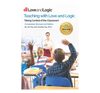
If you want to learn more about how you can take control of your classroom—and create a genuine learning environment—a great resource is our book, Teaching With Love and Logic: Taking Control of the Classroom.
Thanks for reading!