
Children want a sense of control. In fact, all of us do. Problems often begin when adults try to control every small decision and children begin fighting for control in ways that create conflict.
Love and Logic takes a different approach. Parents keep control over the things that truly matter, while giving children plenty of small, appropriate choices in areas where either option is acceptable. These choices give kids practice thinking, deciding, and living with the results of their decisions.
The goal is not to let children run the family. The goal is to give away the control we do not need so we can more effectively hold the limits that really matter.
Why Choices Reduce Power Struggles
When children feel they have no healthy control, they often look for control in less helpful ways. They may argue, stall, refuse, or push against every request. Small choices can satisfy some of that need for control without giving away parental authority.
This is closely connected to Love and Logic’s idea of shared control. Parents can keep the major boundaries while children make decisions inside those boundaries.
A parent can decide that breakfast needs to happen before school while the child chooses between two healthy options. A parent can decide that a coat is needed for cold weather while the child chooses which coat to wear. The boundary stays firm, but the child still gets to think.
Offer Choices You Can Live With
The safest choices are choices where either answer works for the adult. If one option is unacceptable, it should not be offered.
That is why Love and Logic emphasizes choices that are not threats. A choice works best when both options are reasonable and the adult can follow through calmly with either one.
For example: “Would you like oatmeal or eggs?” “Would you like to wear the green coat or the pink coat?” “Would you like to do your homework at the kitchen table or at the desk?” Each choice gives the child some control without handing over the entire decision.

Keep the Important Boundary
Giving choices does not mean that every issue is negotiable. Safety, respect, family responsibilities, and other important limits remain the adult’s job to protect.
The same idea appears in setting limits with kids using Love and Logic, where limits work best when parents describe what they will do instead of trying to control every move a child makes.
The parent might say, “You may choose either coat. We will be leaving in five minutes.” The child gets a real choice, but leaving on time is not up for debate.
Choices Help Children Practice Thinking
Every small decision is a chance to practice judgment. The more children think about manageable decisions when the stakes are small, the more prepared they are to make bigger decisions later.
Love and Logic repeatedly connects this with helping kids make good decisions. Children learn responsibility when they make choices and experience what follows from those choices.
This is one reason small choices matter so much. They are not simply a trick for gaining cooperation. They are practice for real life.
What This Can Sound Like
Instead of: “Put that coat on right now.”
Try: “Would you like the green coat or the pink one?”
Instead of: “Eat your breakfast.”
Try: “Would you like oatmeal or eggs?”
Instead of: “Do your homework at the table.”
Try: “Would you rather work at the table or at your desk?”
Do Not Turn Choices Into Hidden Threats
Choices lose their value when one option is clearly designed to punish or embarrass the child. “You can clean your room now or lose everything you own” may sound like a choice, but it is really a threat dressed up as one.
Healthy choices sound calm and respectful. They communicate confidence: “I trust you to make a decision inside the limit I have set.”
A Final Thought
Parents do not have to choose between total control and no control. Love and Logic encourages us to hold firmly to the boundaries that matter while generously giving away the control that does not.
Small choices help children think, build confidence, and take greater responsibility for their own lives. When parents share control wisely, children often become more cooperative because they no longer have to fight for every ounce of independence.
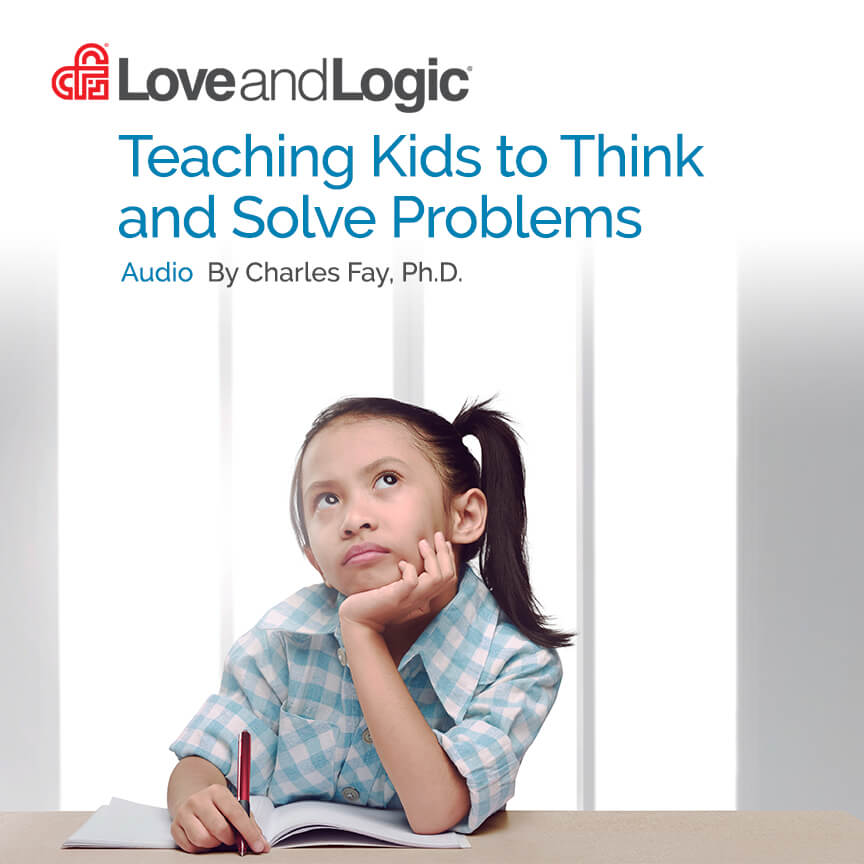
You can help your kids build the skills they need to make good decisions. Our audio, Teaching Kids to Think and Solve Problems, offers techniques to help children think through their options, solve problems, and take greater responsibility for their decisions.
Thanks for reading!