
Sibling conflict can make even calm parents feel like referees working overtime. One child says, “He started it!” The other insists, “She took it first!” Before long, the adult is interviewing witnesses, deciding who is guilty, and trying to force a fair ending.
Love and Logic takes a different approach. Most ordinary sibling disagreements are opportunities for children to practice problem solving, compromise, and living with other people. Parents do not have to settle every dispute. In many cases, our job is to protect safety, protect our own peace, and place responsibility for solving the conflict back on the children.
The important question is not, “How do I make them stop fighting forever?” It is, “Is this a problem they can safely learn to solve, or is this a situation where an adult truly needs to step in?”
Start by Deciding Whether the Conflict Is Safe
Ordinary arguing, disagreement over a toy, frustration about whose turn it is, and minor bickering are normal parts of family life. These moments can give children valuable practice negotiating with people they love.
Parents should step in when there is a real safety concern, serious physical aggression, a significant power imbalance, or a child who is unable to protect himself or herself. Safety is always the boundary. When a conflict becomes dangerous, it is no longer a problem for the children to solve alone.
Avoid Becoming the Family Referee
When parents rush in to determine who started the fight, children can quickly learn that conflict is a reliable way to recruit an adult to take sides. The parent ends up doing most of the thinking while the children do very little.
Whenever it is safe, keeping responsibility with the children gives them opportunities to practice resolving disagreements and cooperating. For more ideas see Four Tips for Soothing Sibling Rivalry.
A calm parent might say, “This sounds like a problem the two of you can solve. Let me know what you decide.” That response does not guarantee instant peace. It does, however, return the thinking to the people who own the disagreement.

Protect Your Own Peace Without Solving Their Problem
Staying out of the dispute does not mean parents must listen to yelling all afternoon. We can set limits around what affects us. If the argument is creating chaos in the family room, a parent can say, “You are welcome to work this out somewhere it does not bother my eyes or ears.”
This is another place where Setting Limits with Kids Using Love and Logic can help. The parent focuses on what the adult will allow or do instead of trying to control every word the children say to each other.
If the conflict drains the parent’s time or energy, it is also reasonable for the children to help restore what was lost. The point is not revenge. The point is for the children to experience that their conflict can create a problem for other people, and problems sometimes need to be repaired.
Offer Ideas, but Do Not Take Ownership
Sometimes children genuinely do not know how to resolve a disagreement. Parents can offer ideas without deciding the outcome for them. Ask, “Would you like a couple of ideas?” If they say yes, offer two or three possibilities and then step back.
For example, the children might take turns, trade something, choose a different activity, put the disputed item away for a while, or come up with a solution neither parent would have imagined. The more children practice generating solutions, the less they need an adult to manufacture one.
What to Say When Siblings Fight
Child: “She took it from me!”
Parent: “That sounds frustrating. What do you think you two are going to do?”
Child: “Make him give it back!”
Parent: “I bet you can come up with something. Would you like an idea, or would you rather work it out yourselves?”
Both children: “Mom! Dad! He started it!”
Parent: “I love you both too much to decide whose problem this is. Work it out somewhere that does not bother me.”
Be Careful About Comparisons
Sibling conflict can become more intense when one child feels compared with another. Comments such as “Why can’t you be more like your sister?” may deepen resentment rather than solve the immediate problem. Children benefit when parents celebrate their different strengths instead of turning one child into the standard for another.
Know When Stepping In Is Necessary
There is an important difference between stepping back from normal sibling bickering and ignoring dangerous behavior. If children are hurting each other, threatening serious harm, or the conflict has become unsafe, adults must intervene to protect everyone involved. Ongoing or severe aggression may also require professional help.
Love and Logic is never about watching children get hurt in the name of learning a lesson. It is about giving children as much responsibility as they can safely handle while adults remain firmly responsible for safety and healthy limits.
When to Step Back and Let Kids Work It Out
Siblings do not need parents to create perfect harmony every time they disagree. They need opportunities to learn how relationships work. When parents stay calm, protect safety, set limits around what they can control, and avoid automatically becoming the judge, children have more chances to practice solving problems themselves.
The next time the familiar cry of “He started it!” comes from the next room, ask yourself whether this is a safety problem or a learning opportunity. If everyone is safe, the most helpful response may be less refereeing, a little empathy, and a lot more confidence that the kids can work on a solution.
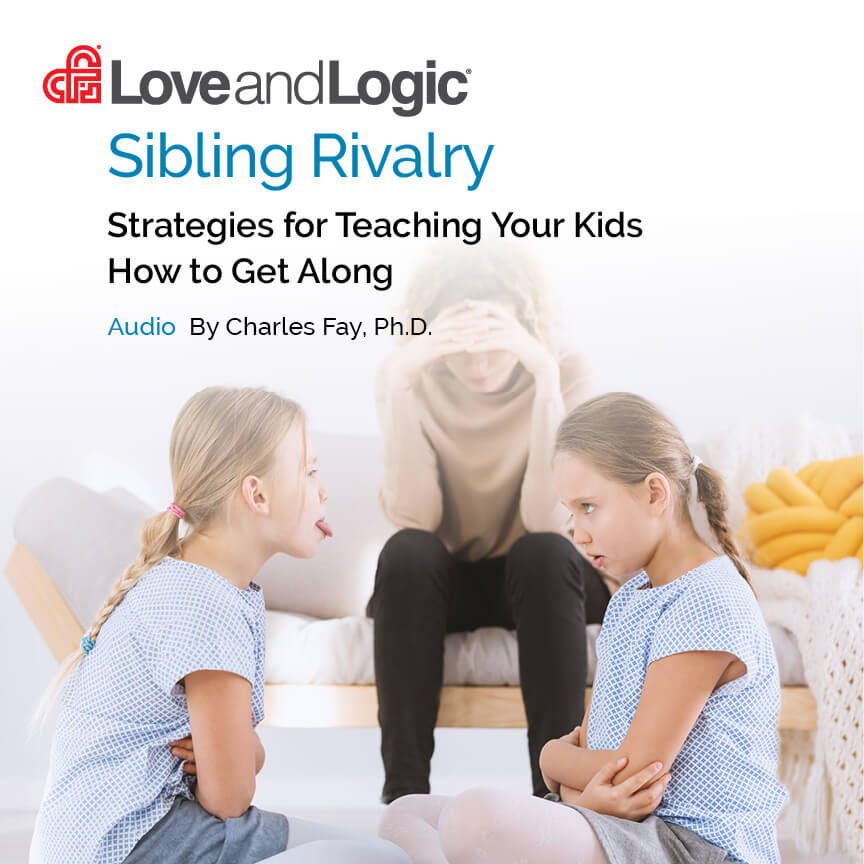
For more ways to reduce sibling conflict, listen to our audio, Sibling Rivalry. You'll learn Love and Logic strategies for setting calm limits, encouraging cooperation, and helping children work through disagreements..
Thanks for reading!